Digital stamp cards for your business.
A digital stamp card stores eligible purchases and redemptions in an online record. The NFC keychain identifies the customer, while the balance stays in their account. It is an alternative to paper for bakeries, ice cream shops and barbershops that want to recognise regular visits without relying on a card kept in a wallet.
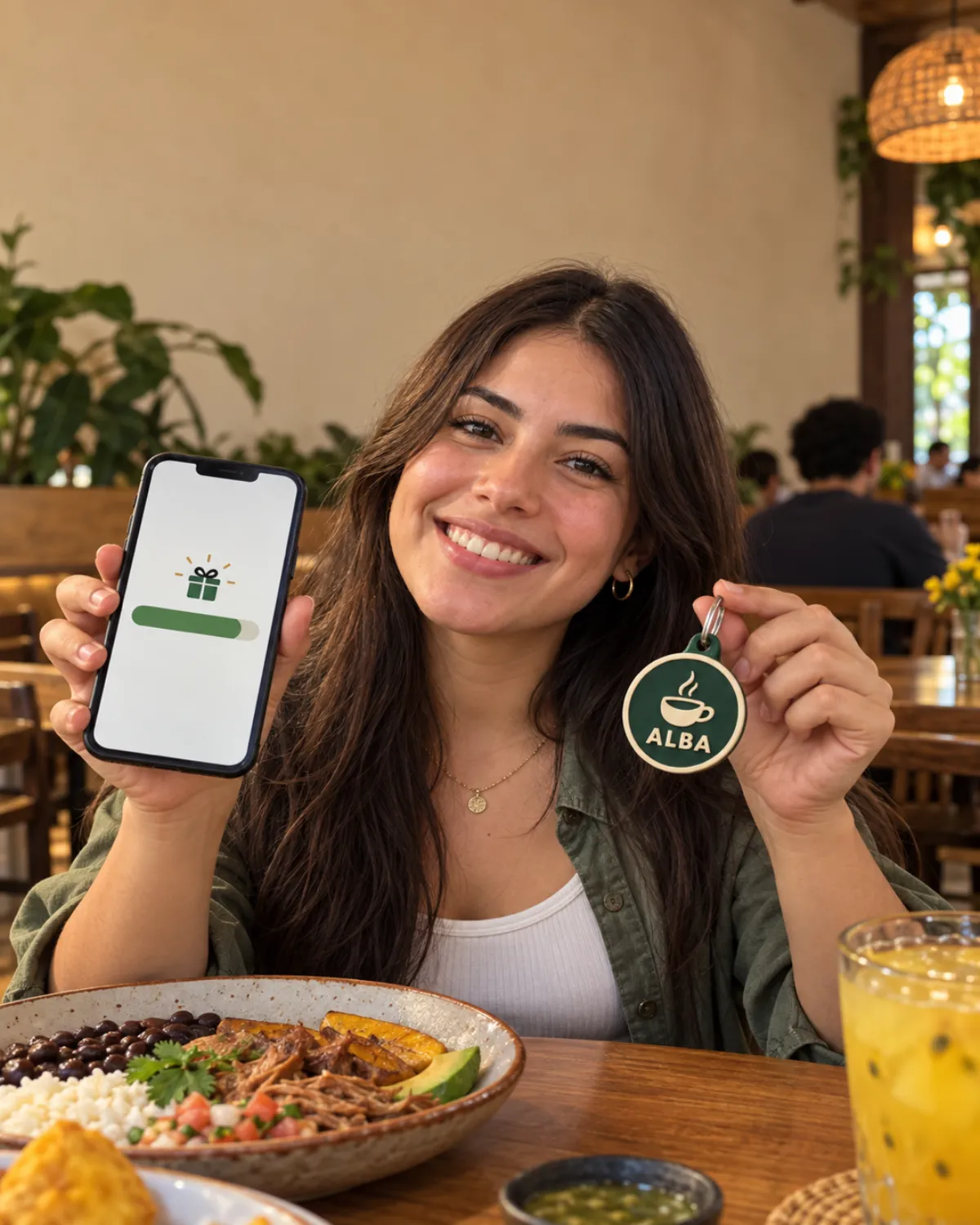
What changes compared with a paper card
Paper is easy to hand out, but it can get wet or lost, and a stamp does not tell you who recorded it. With Lío, authorised staff record purchases and redemptions, leaving a transaction history. The keychain can also be lost: the difference is that the owner can find the account by phone number, block the lost keychain and assign a replacement without erasing the balance.
How to transfer stamps already earned
Announce the change at the checkout and set a clear period for bringing in existing cards. Check each physical card with the customer and explain the equivalent opening balance. The owner, rather than the cashier, records an adjustment with a reason, for example a paper-card migration. If a customer has five valid stamps and you keep the same scheme, transfer those five stamps. Collect or mark the old card to prevent a second transfer.
A rule that fits each visit frequency
A bakery may see customers several times a week; a barbershop usually has longer intervals. Do not copy the same target without considering that difference. A bread roll, an ice cream topping or an additional service can be a useful reward if the margin supports it. State which purchase earns a stamp, how many stamps are needed and what the reward includes. Train staff to explain the rule in one sentence.
The phone number is a backup, not an app requirement
Customers open their balance page in a browser and do not need to install an app. Tapping the keychain requires a compatible NFC phone and an internet connection. On enrolment, explain why you request a phone number and how it helps find the account. Avoid shared staff logins: individual accounts and transaction records make it easier to review a mistake without blaming the customer.
Make a small, organised transition
Start with one shift and check real enrolments, purchases and redemptions before expanding to the whole team. Keep the transition rules visible and review migrated balances with the owner. In a Lío demo, you can walk through the checkout process and the rewards dashboard. Decide the scheme before recording your first transaction, because the choice between stamps and points is locked afterwards.
Frequently asked questions
Are stamps on the old card lost?
You do not have to start from zero. The owner can record a balance adjustment after checking the physical card and explaining the equivalence to the customer.
Can a cashier migrate balances on their own?
No. Balance adjustments belong to the owner and require a reason. Cashiers handle purchases and redemptions according to their permissions.
Can the keychain ever be lost?
It can be lost. The account balance is preserved: find the customer by phone number and replace the keychain after blocking the old one.
Does it work for a barbershop with monthly visits?
Yes. Set the target and, if using inactivity expiry, its period to match that frequency. A distant reward is harder to explain and reach.